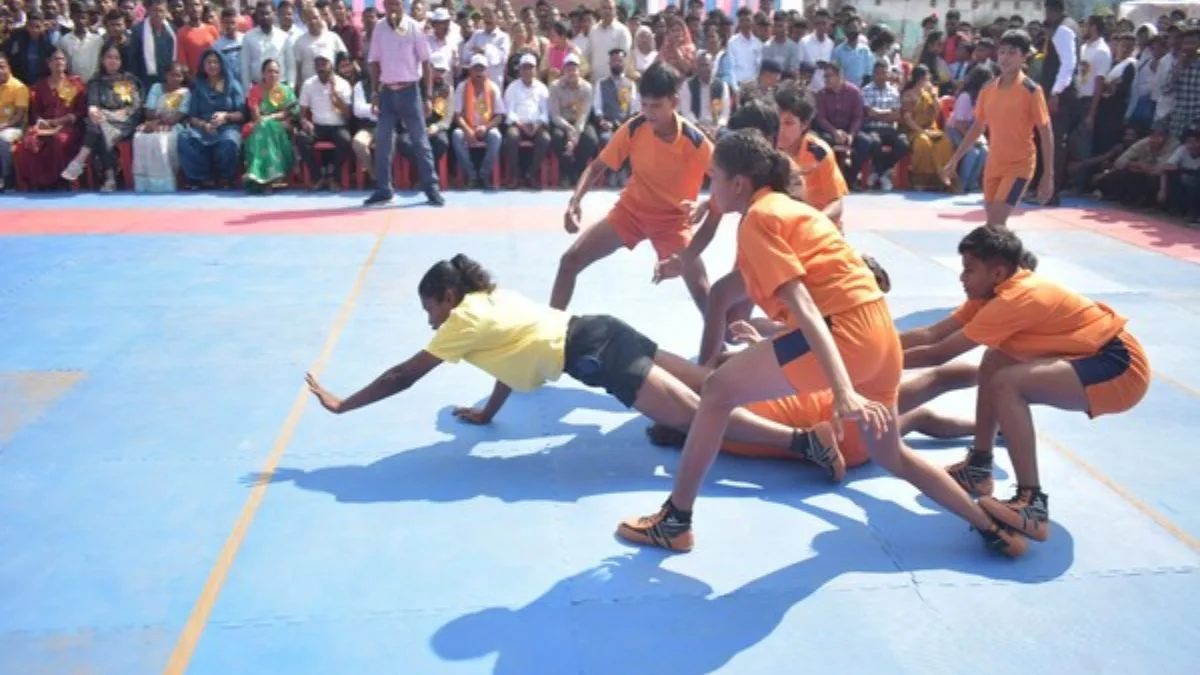
The central and state governments are moving ahead with an ambitious plan to eliminate Maoist insurgency in Chhattisgarh by 31 March 2026, a target repeatedly emphasized in high-level security and administrative briefings. The push is being backed by intensified operations across Bastar and parallel efforts to deepen public trust in state institutions.
Yet, even as these initiatives gather momentum, concerns have surfaced regarding the treatment of young participants at the Bastar Olympics, raising questions about the consistency of the state’s confidence-building measures in the region.
Advertisement
Unease followed images and accounts emerging on Thursday from Jagdalpur, where several girls and young players from remote districts were seen standing in long queues outside public toilets and waiting in the cold without adequate protection from the falling temperatures.
For an event that the administration has repeatedly projected as a platform to empower Bastar’s youth and bring them closer to mainstream civic life, the lapses in basic arrangements have prompted public scrutiny over whether such oversights risk weakening the very trust the state seeks to cultivate.
Union Home Minister Amit Shah, who is scheduled to review security and development initiatives during his two-day visit, will arrive in Raipur late Friday night. On Saturday, he will travel to Jagdalpur to attend the closing ceremony of the Bastar Olympics from 2:45 pm to 4:45 pm, before returning to New Delhi.
Ahead of the ceremony, teams and players were seen moving across Jagdalpur in search of accommodation, food, and essential facilities. Several participants said the night temperatures, hovering around single digits, made practice and movement difficult, especially in the absence of bonfire arrangements. Others reported that the lodging facilities did not provide hot water, an issue they believed should have been anticipated by local organisers.
The Statesman raised these concerns directly with Chief Minister Vishnu Deo Sai, asking whether operational shortcomings at a flagship youth event might undercut the state’s broader strategy in Bastar at a time when the government is attempting to consolidate trust and push the insurgency to its final margins. The Chief Minister acknowledged the concerns and said, “We have also received information about the issues there, and corrective steps will be taken.”
As Chhattisgarh advances toward its deadline for ending Maoist violence, senior officials note that the success of any security strategy depends as much on community engagement as on field operations.
Effective youth outreach, they argue, remains central to dismantling the social vacuum in which the insurgency once thrived. Whether the lessons emerging from this year’s Bastar Olympics lead to stronger institutional responsiveness will be closely watched in the months ahead, especially in a region where public confidence is as critical as operational gains.